How Variations in Betting Lines Shape Participation Patterns Across Digital Table Games and Reel Machines
Parker Patterson · Sep 23, 2026
How Variations in Betting Lines Shape Participation Patterns Across Digital Table Games and Reel Machines
Betting lines in digital environments refer to the minimum and maximum wager amounts, payline configurations in reel machines, and dynamic odds adjustments in table games such as blackjack or roulette, and these elements directly influence how players select and engage with specific titles over time. Data from regulatory bodies indicates that adjustments to these lines correlate with shifts in session duration, frequency of play, and player migration between game categories, while research from multiple jurisdictions tracks these patterns through anonymized transaction logs released quarterly.
Betting Line Structures in Digital Table Games
Digital table games allow operators to modify betting lines in real time, with minimum bets ranging from fractions of a unit to several hundred units depending on the platform and time of day, and studies compiled by the Alcohol and Gaming Commission of Ontario show that lowering minimums on blackjack tables increases participation rates among new accounts by measurable margins during promotional windows. Observers note that when maximum betting lines expand on roulette variants, high-volume players concentrate activity on those tables while lower-stakes participants shift toward automated versions with tighter caps, creating segmented traffic flows documented in platform analytics from September 2026 onward.
Variations also appear in side-bet options and progressive lines attached to table games, where the addition of multiple betting tiers produces distinct participation clusters; one analysis released by the Australian Gambling Research Centre found that tables offering three or more distinct line options retained returning players at higher rates than single-line formats across a twelve-month sample period. Those patterns hold steady even as operators adjust lines seasonally, with data revealing that mid-week reductions in minimum bets draw consistent evening traffic that tapers when lines return to standard levels.
Payline and Bet Configurations on Reel Machines
Reel machines operate through fixed or adjustable paylines that determine how many symbol combinations contribute to potential outcomes, adn changes to the number of active lines per spin alter both cost per round and perceived engagement levels. Figures released by the Nevada Gaming Control Board demonstrate that machines with twenty-five or more selectable lines attract longer average session times compared with five-line models, although total coin-in volume per machine remains comparable when operators normalize for bet-per-line settings.
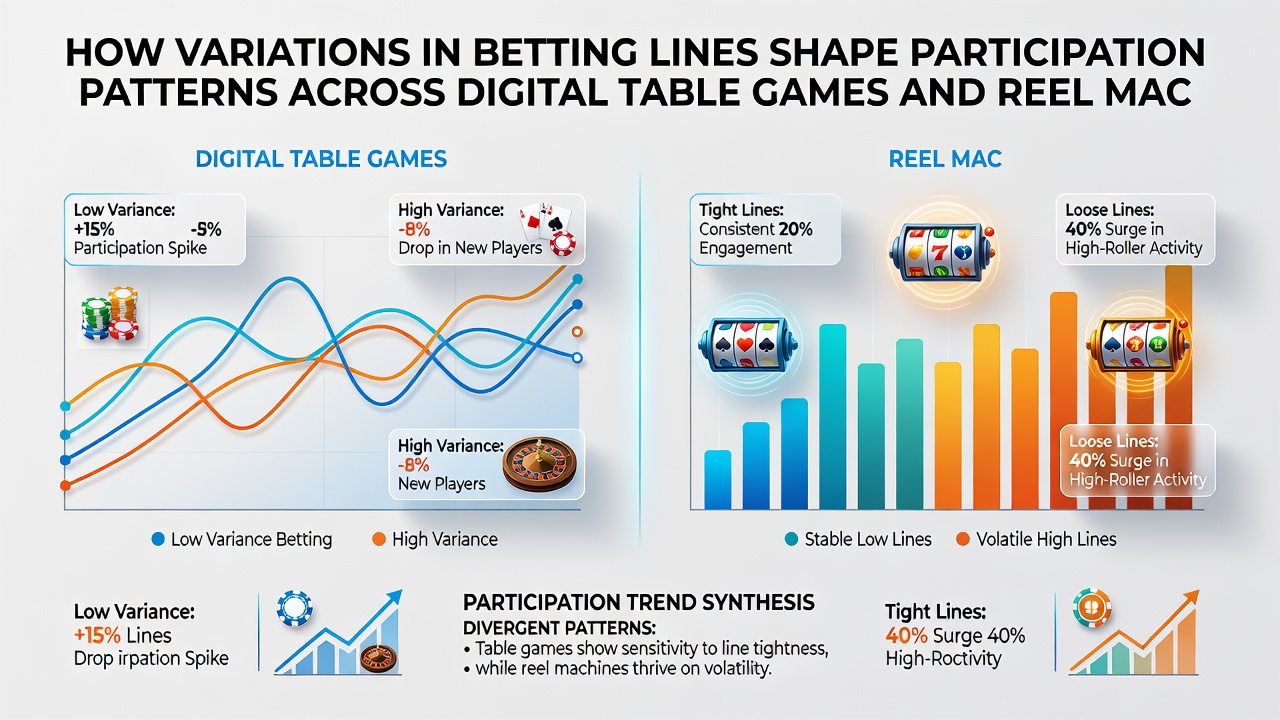
Operators frequently test dynamic line adjustments that scale with player history or account balance, and transaction records indicate that players encountering an automatic reduction from fifty lines to twenty lines often extend their sessions rather than switching machines immediately. Research compiled across multiple Canadian provinces further reveals that reel machines permitting bet-per-line increments in smaller denominations sustain steadier participation curves throughout the day, whereas larger step increases in betting lines coincide with sharper drop-offs after initial spins.
Comparative Participation Trends Across Categories
Cross-category data shows that digital table games respond more rapidly to betting line changes than reel machines because table game interfaces update minimums and maximums without requiring physical reconfiguration, whereas reel machines rely on software updates pushed at scheduled intervals. Participation logs from September 2026 indicate that a simultaneous reduction in table game minimums and an increase in reel machine payline options produced measurable migration from slots to tables during peak evening hours, with the shift reversing once lines reverted. Those who've examined aggregated datasets note that table game players tend to cluster around mid-range betting lines while reel machine users distribute more evenly across low-line and high-line configurations, producing different retention signatures for each category.
Geographic comparisons add further detail, with reports from the Alcohol and Gaming Commission of Ontario highlighting stronger responses to line variations in table games than in reel machines during the same monitoring period, whereas Australian data points to more uniform adjustments across both categories when operators apply identical percentage changes to betting thresholds.
Conclusion
Available records demonstrate that betting line variations function as primary levers shaping how players distribute time and activity across digital table games and reel machines, with measurable effects on session length, category preference, and return frequency documented in regulatory datasets through September 2026. Continued monitoring by oversight agencies continues to map these relationships through standardized reporting frameworks that track line adjustments alongside participation metrics.